Making my way through Bavaria - Nuremberg and Munich, Germany
- Julia Metelitsa

- Apr 21, 2022
- 6 min read
Fitted with cobblestone roads the city of Nuremberg has an old medieval charm. As most of the city was destroyed during WW2, it was rebuilt shortly after piece by piece, preserving its history.


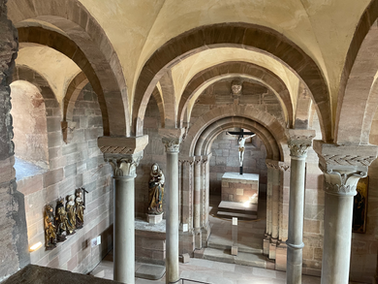


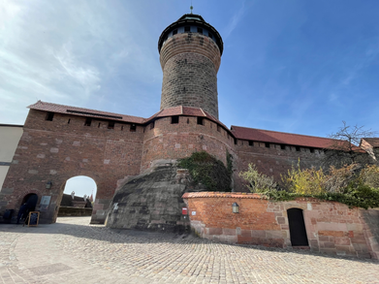
Imperial Castle of Nuremberg - built during the middle ages, only the lookout tower, deep well and chapel survived WW2. The deep well still carries water and is 1.5 times the size of the tower. The lookout tower is the perfect spot to see all of Nuremberg.





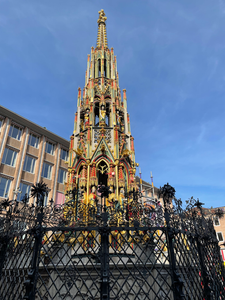
Hauptmarkt- there are plenty of booths with vendors in various points of the city, but the majority are located in hauptmarkt right before holidays. Currently an Easter market, but also used in the winter time for the Christmas market.
This square also includes shöner brunnen, a beautiful fountain, containing no running water but only serving as one of the cities favourite monuments. On the east side of the hauptmarkt square stands Iglesia de Nuestra Señora, a 14th century church.


Bratwursthäusle - serving Nuremberg sausage, grilled traditionally over a wooden fire. When in Nuremberg it’s vital to get the Drei im Weckla (three sausages in a bun). This restaurant also serves rostbratwurstküche with sauerkraut, potato salad and horseradish. Both were very tasty!


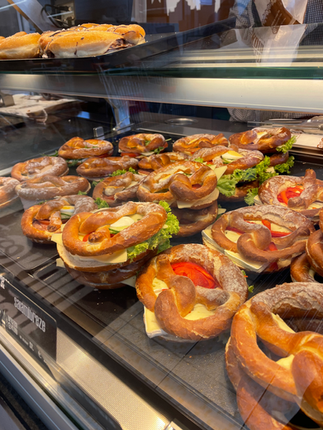


Brezen - another German specialty is a pretzel. Brezen Kolb vendors can be found throughout the city. A classic is a pretzel with butter, but they also serve various pretzel sandwiches, including a breakfast version with egg and bacon on a pretzel, which was the ideal meal before jumping on my train to Munich.





Lorenzer Platz + St. Lorenz-Kirche - this square is located just south of the river and mainly has fruit and vegetable vendors, all selling white asparagus, known as Germany's "white gold" and many sausage vendors as well. Hovering over the square is the St. Lorenz Kirch, an Evangelical-Lutheran church, dedicated to St. Lawrence.


Nazi rally grounds - Nuremberg was used by the Nazi party to host various rallies. The rally grounds can be visited and explored, along with the unfinished coliseum-looking building, originally intended for congress meetings. It was very eerie to stand where the Nazi Party leader stood and spoke, but on the other hand, walking around the park brought a sense of peace, knowing that all wars come to an end and that the truth will always prevail. The grounds also included a museum and large park with a lake that could be explored by flamingo-shaped peddle boats.


The Way of Human Rights - a street with a memorial for all who pass to feel comfortable and be aware of their human rights. Since Nuremberg was used for Nazi rallies and numerous human rights were violated during Hitler's ruling, the city opened a monument in the early 1990's to show that Nuremberg is now a city of peace and acceptance.


James Blunt Concert - I made a spontaneous decision, 2 hours before doors opened for the concert to buy a ticket and see James Blunt perform. I lucked out with the spot and had the most impactful experience. Although the stadium was very big, the concert felt very intimate, as if there were only 50 people in the audience. I found the location of the concert interesting as well, since it sits on the former rally ground area. It proved to me how out of a horrible history, Germans are doing what they can to move forward and use the area for people to come together for good reasons and to share positive experiences.
I took a short, one hour train ride south, to Munich, the capital of Bavaria. I think I heard more Ukrainian spoken in Germany than I do at home. Whether on the tram, at an attraction, in the streets or in the restaurant, it seems that Germany is now home to many Ukrainians - especially Munich and Berlin, and surprisingly, in Nuremberg also.


I was in Munich in 2017 and saw some city attractions then, so this time around I decided to see a few new ones and head back to some familiar ones too.


Marienplatz + Neues Rathaus – in the centre of Munich sits the new town hall with a clock tower that still sings and dances every hour during the day. The lookout at the top of the town hall provides a nice view of all of Munich. Marienplatz is always vibrant with visitors, performers and many tourist tours. Just steps away is St. Peter’s church with another lookout over the city.


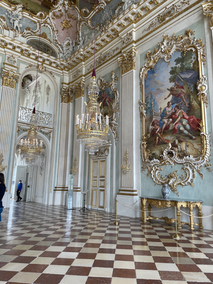


Schloss Nymphenburg – a palace on the outside of Munich, surrounded by beautiful grounds. The park around the palace can be explored without paying an entrance fee, but I was very intrigued to see what the inside looked like, and it did not disappoint. This palace was intended as the summer home of the Bavarian royalty in the 17th century. While exploring the park grounds I found two more smaller palaces, which were the smaller summer homes for the royal families.


Alter Botanischer Garten – a small botanical garden around the corner from the main train station and behind the Palace of Justice.


Traditional Sweets – when in Bavaria there are certain pastries that can’t be missed. Cafe Frischhut, around the corner from Marienplatz serves the best schmalznudel (traditional donuts). They are served warm and you add sugar on top. Apparently I didn't put enough as the Germans next to me were piling up their donuts with sugar. Another treat is topfenstrudel. The best way I can describe it is cheesecake inside strudel dough. It’s not too sweet and is super tasty. Finally, apfelstrudel (apple strudel) is a classic. Served with warm vanilla sauce or ice cream, it’s just so delicious and a must!


Englischer garten + Eisbachwelle – a large park on the north side of Munich with surfers showing off their skills at the south end all year round. I lucked out as it was nice and sunny and a perfect day to sit by the water.


Stachus - this large public square in the heart of Munich was originally named Karlzplatz, back in the 18th century. The castle looking entrance, Karlstor, was the entrance into the city in the medieval ages, up until the 18th century.


Frauenkirche – I visited Munich during Easter weekend, so it was only fitting to attend an Easter service at the main cathedral. The service was in German of course, but I was mesmerized by the singing and string orchestra who sang and played wonderfully. I even met a family from Lviv, Ukraine, who were dressed in beautiful vyshyvanky (traditional embroidered shirts), a small taste of home. After the service I headed to a cafe and enjoyed some carrot cake, as close to an Easter meal as I got.




Viktualienmarkt – an outdoor food market selling many German favourites, including large dill pickles, which are just given to you in wax paper to be eaten on the street. As it was the day before Easter, many locals were picking up last minute items such as eggs, special bread and Easter wreaths with pussy willow branches. I stopped into a coffee shop - Kaffeerosterei, selling the best chai latte in Munich and Florentinier cookies (pressed almonds with jam and dipped in chocolate).


Andy’s Krablegarten – this restaurant deceives you from the outside, as when you head to the back you are welcomed with a large, enclosed beer garden. Serving up the best and biggest schnitzel, it does not disappoint. I’m not sure how, but I finished the full schnitzel and salad.
*Special Schnitzel, marinated in horseradish + mustard
*Potato and cucumber salad

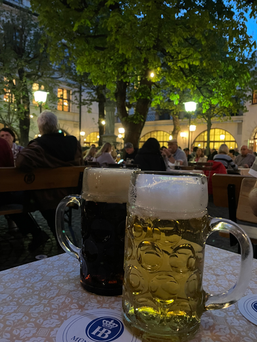



Hofbrauhaus – as much as it is a tourist attraction, I don’t think it could have been missed when visiting Munich. Serving 1L jugs of beer, sweet and salty pretzels and German specialties, this three floored beer-hall is always busy.


Ukrainian Free University – the place where my baba (grandma) attended 1 semester of post secondary education after fleeing Ukraine during WW2. This is the only place where she obtained a formal university education and unfortunately couldn’t continue after arriving in Canada as working took precedence. I made a short visit to the university located in a pretty residential area and after showing the photos to my baba, she can attest that it still looks the same as back in 1947.






#StandwithUkraine – a large sign hanging in front of the opera, flags and stickers throughout the city is how Nuremberg showed their support for Ukraine. Munich also had blue and yellow hanging throughout the city. Both cities had volunteers at the train stations, who helped fleeing Ukrainians find homes, work or a train to another city. I also noticed a sign which indicated that travel by train was free throughout Germany for Ukrainians seeking refuge. Although the government of Germany is still lacking with their support, the citizens are doing what they can to help Ukrainians looking for a safe place to stay.
Danke Deutschland! Off to central Europe, first up Czech Republic.


Comments